January 30th, 2018 at 5:46 pm 
|
January 15th, 2018 at 11:09 am
|
December 13th, 2017 at 11:21 am
With the winter months comes snow! When the roads get bad, we can always count on snow plows to clear the way. Although snow plows and deicing equipment make the roads safer for us, we need to be cautious when sharing the road with them. Here are five tips for sharing the road with snow plows:
1. Begin slowing down when you see the snow plow, and keep some extra distance between you. It's recommended you stay at least five car lengths (or 70 feet) behind a snow plow truck. The extra distance will give you more time to react in the adverse weather conditions.
2. Don't stop too close. The trucks can also be spreading de-icing materials from the back of the truck and the salt may hit your vehicle if you're too close. The vehicle may also need to back up and, if you are too close the driver may not be able to see you!
3. Give the snow plow truck room to do its job. Snow plow trucks are large, heavy vehicles. With the driver's blind spots, it's difficult to see around every area of the vehicle. Additionally, these trucks are heavy so they might not be able to stop quickly. Be patient and stay out of their way. If you're not in a hurry to get somewhere, don't pass them. Besides, the road behind them will be safer to drive on anyways!
4. If you have to pass them, take extreme caution when passing and don't drive too close. The front plow may be wider than the lane it's in. Snow plows can also create clouds of snow that can reduce or eliminate your visibility.
5. Give the plow some extra room in high risk areas. Areas where drivers are most at risk can include hills, curves, ramps, bridges and interchanges.

|
November 14th, 2017 at 5:03 pm
Fall and winter weather can be harsh on your landscape. Follow our three P's of fall plant care to ensure your landscape will remain healthy throughout the cold months!
PRUNE
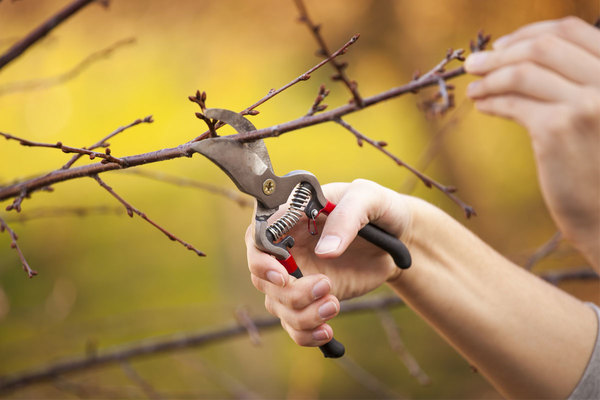
As a general guideline, prune most perennials down to 1” above ground and shrubs can be pruned back by one-third. Do not prune spring-flowering shrubs such as Viburnum, Lilac or Witch Hazel. Spring-flowering shrubs produce their buds in fall, so pruning these before winter may prevent spring blooms from forming. Ornamental grasses can be pruned in either the fall or spring depending on your preference.
PROTECT
Protect your evergreens by applying an anti-desiccant, commonly referred to by the brand name Wilt-Pruf. Anti-desiccants are sprays that provide a protective coating to evergreen foliage to help retain moisture and prevent evergreens from drying out. Burlap is also a defensive barrier, keeping plants protected from heavy snows that can crush and strong winds that can cause windburn. Some broadleaf evergreens such as boxwood are particularly susceptible to winter windburn.
PROVIDE
Provide additional benefit for your plants by supplying a fall fertilizer. Fall fertilizer helps builds a nutrient reserve your plants can access throughout the winter. Your plants will have stronger, more robust roots in the spring, leading to large blooms early in the coming year.
|
October 17th, 2017 at 1:33 pm
With fall comes cooler weather and less daylight hours. Leaves are changing, temperatures are dropping and the holidays are coming up quickly! Your landscape can complement the season with usability and interest. Here are our top two landscaping trends for fall.
Warm colored flowers
Mums are a great way to tie in fall colors to your landscape. Mums, Pansies and Asters do exceptionally well in the cooler weather. Mums come in a wide variety of colors and can create focal points within your landscape beds. Use just one or all three of these flowers and you'll have wonderful pops of colors until the first hard frost!

Lit-up Landscapes
Not only does elegant outdoor lighting draw attention to a homes' exterior and landscape, but it also provides safety lighting for residents and visitors. Landscape lights come in a variety of light fixture styles and colors and you can select your lights to compliment your homes' ambiance. Properly planned lighting systems provide enjoyable surroundings when entertaining and, even when it's too cold to go outside, they create an interesting and pleasing view through the winter season. Additionally, color-changing LED lighting systems allow for instant color changes during holiday seasons, special events and can also be used to enhance landscape colors.


Use either of these landscaping trends and your landscape will be a hit this season!
|
September 12th, 2017 at 3:51 pm
Now that summer's over, it's time to prepare your lawn for fall! Here are some tips to keep your lawn healthy as it begins to get colder.
Aerate
Core Aeration allows nutrients and water to penetrate compacted soil. Aerating combined with fertilization in the Fall establishes a healthy foundation for next Springs' lawn growth. Below are some other reasons why aeration is important:
•Core Aeration allows for gas exchange, and promotes drainage.
•Aerated lawns are stronger and more able to endure harsh conditions such as excess heat and droughts.
•Core Aeration helps to relieve compaction all over your lawn, and is especially beneficial for high traffic areas.
Select a slow-release, NO phosphorus Fertilizer
A hot summer can deplete your lawn's nutrients. Replenishing your lawn with nitrogen and potassium in the fall helps to create a nutrient base, promoting a healthy lawn early in the warmer seasons.
•Nitrogen promotes protein growth.
•Be sure to select a NO phosphorus fertilizer. Public Act 299 of 2010 prohibits the use of phosphorus fertilizers on residential or commercial lawns, beginning January 1, 2012.
•Potassium helps prevent wilting and assists in additional protein growth.
Slow-release fertilizers release Nitrogen over time, providing nutrients for a longer period of time and limiting the amount of salt running off into ground water.
Don't cut too low
Not only can cutting too low lead to burnt grass, but it can also impact the way your grass grows. Cutting grass blades to 3” or more promotes healthy root growth. Leaving the clippings on the lawn recycles nitrogen back into the soil.
Be mindful
Excess fertilizer can be harmful to water supply. Sweep loose fertilizer into the lawn and keep fertilizer 20 feet away from storm drains.
It's never too early to begin preparing! Following these tips now should help ensure your grass will come back healthy and beautiful in the Spring!

|
August 8th, 2017 at 3:23 pm
Last month may have been Smart Irrigation Month, but that doesn't mean we shouldn't always be smart about preserving water and saving money!
Start Smart
Hiring a certified irrigation professional and insisting on high-quality components is the smart way to make sure your system will operate at peak efficiency for years to come. Always check references and confirm your contractor is properly insured.
Smart Planning and Planting
- Work with a certified irrigation contractor who has experience in your local area.
- Consider local climate conditions, as well as your lot's exact features. Choose appropriate plant species that have lower watering requirements.
- Group plants with similar water needs close together and separate lawn areas irrigation zones from planting beds.
- Plan your irrigation zones carefully. Be sure that your system will have enough capacity, now and in the future. The more irrigation zones you plan, the more you can tailor watering even if you modify landscaping.
Smart Scheduling and Watering
- Schedule each individual zone in your irrigation system to account for sun, shade and wind exposure.
- Consider soil type, which affects the how quickly water can be applied and absorbed without runoff.
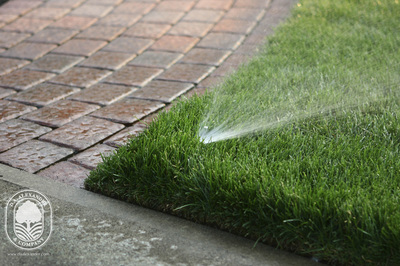
- Make sure you're not sending water down the drain. Set sprinklers to water plants, not your driveway, sidewalk, patio or buildings.
- Water at the right time of day. Watering when the sun is low, winds are calm and temperatures are cooler minimizes evaporation by as much as 30 percent. The best time to water is during early morning hours.
Smart Maintenance
- Check that sprinkler heads are high enough to clear plants that may have grown taller since the system was installed.
- Adjust spray patterns and positions to make sure they aren't watering “hardscapes” like sidewalks and buildings.
- Evaluate pressure and adjust as needed so sprinklers work optimally to distribute the water.
|
July 12th, 2017 at 4:47 pm
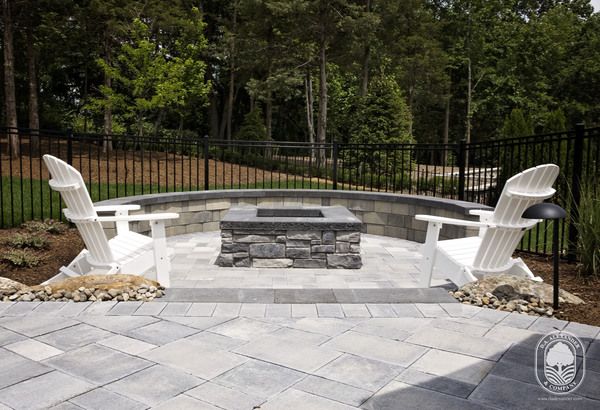
As D.A. Alexander & Company knows, a well-designed outdoor space serves as an extension of your home, bringing the indoors outdoors during any season. The addition of a fire feature brings your space to life, anchors your space visually, and naturally functions as a gathering spot. There are many options when considering a fire feature for your outdoor space, each bringing a unique style, aesthetic quality and function.
Classic fireplaces and pits come in all shapes and sizes. There's a wide range of fully customizable, modular fireplace kits that make the installation process easy whether you choose wood burning or gas fueled. Consider a built-in, raised pit made from stone, brick or slate with a 360° or 180° degree retaining-wall seat to comfortably accommodate friends and family while entertaining. Fireplace kits give designers the option of building your fireplace entirely from retaining block, or attaching a stone façade to a prefabricated concrete insert. Modular fireplaces can be fully customized to include additional options such as wood storage boxes, pizza ovens, waterfalls and extended table tops. Modular kits also come in a wide range of colors and patterns to match the exterior of your home.
Fire pits can also be gas or wood burning. Gas fueled fire inserts also come in a variety of shapes and sizes including, linear, star-shaped, half-moon, fish-eye or wave-shaped for masonry pits. Some manufacturers offer all-in-one units built into prefabricated outdoor furniture such as dining tables or benches. When selecting a gas-fueled fireplace or fire pit, you can choose from lava rock and fire glass to add beauty and intrigue to your fire feature. Smooth, rough and reflective fire glass comes in a variety of sizes and colors.
For smaller spaces, portable steel fire-pits, chimineas, or bronze or copper fire bowls offer aesthetic value and functionality without the permanence and can be relocated as your space evolves.
Contact D.A. Alexander to learn about the full range of fire feature options to fit your unique style and space.
|
June 6th, 2017 at 9:54 am
Soil is essential to plant health and growth. People are accustomed to buying soil for their annual pots and gardens. The same consideration should also be given to the soil used in the landscape.
Here are three reasons why proper soil installation is important:
1. Proper soil installation provides a better environment for roots and plant growth.
Improvement of soil structure, water holding capacity and availability of nutrients are important for plants to grow. The better the soil texture, the better root growth.
2. Plants will grow more uniformly.
Proper soil installation allows for equal nutrients to be provided to you landscape plants creating a more uniform growth habit.
3. Soil amendments help achieve healthier color display.
Good drainage, adequate nutrients and available water will allow for annuals, perennials and other flowering plants to become more vibrant in color. Southeastern Michigan has a range of native soils that are not often ideal for non-native plants. Amending native soils will help achieve the drainage, nutrient and water retention for an ideal environment.
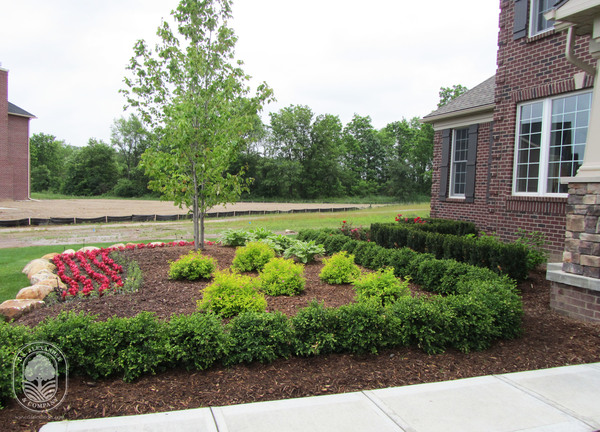
Landscape using proper soil - at the time of installation.
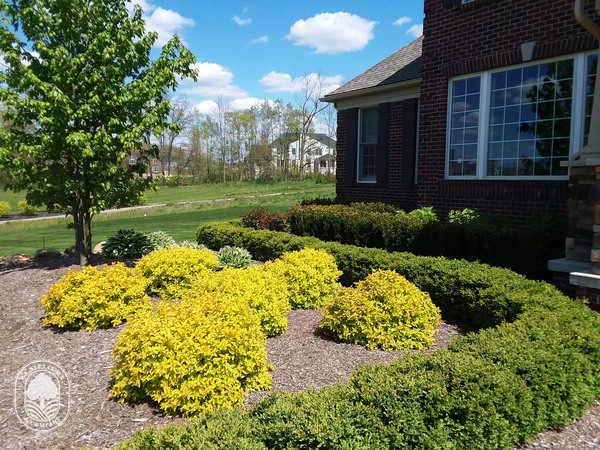
Same landscape two years later, showing abundant growth and vibrance in plant color.
|
May 10th, 2017 at 10:57 am
Welcome to Michigan; unexpected waves of heat, followed by frosty mornings, humidity and rain will keep you on your toes and leave you wondering when to plant your annual flowers. Factor in full sun, partial sun, partial shade and full shade requirements and annual flower options become overwhelming. Here are our suggestions for annual flower success.
Planting Time:
Generally spring annual flowers in Michigan are planted between Mother's day and Memorial Day. Planting after Mother's day reduces the risk of frost damage. Frost is still possible; be alert to frost warnings and cover annual flowers with a sheet or thin plastic to prevent damage. Remove coverings the next morning so your annuals don't bake in the sun.
Full Sun:
Cleome (spider flower): A tall annual, 24-48”, often used as a “thriller” in containers is heat and drought tolerant. Cleome bloom from planting to frost.
Part Sun:
Lobularia (sweet alyssum): Highly fragrant small blooms cover this plant all season long and no deadheading required! Sweet Alyssum can also grow in full sun and is most commonly found with white flowers though lavender, darker purple and sometimes pink shades are available.
Shade:
Coleus: Grown for its beautiful foliage colors, Coleus can be used as a border plant in containers or in masses.
Full Sun, Part Sun, Shade:
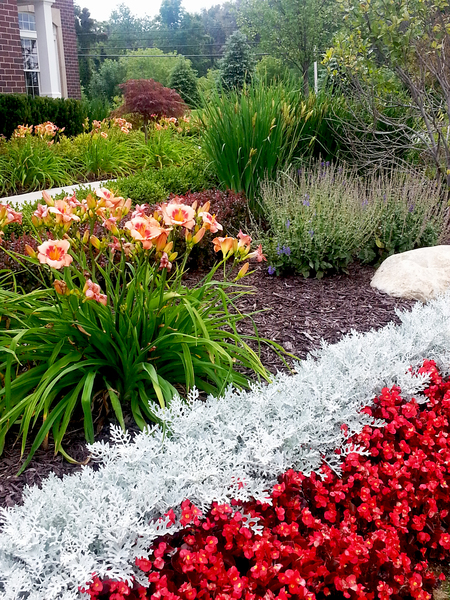
Wax Begonia: A homerun annual that can grow in just about any light requirement, wax begonia are used for mass plantings, edging, borders, containers and hanging baskets. Available with white, pink or red flowers, wax begonia have either shiny bronze or green leaves. The showy flowers bloom from May to October.
|


